
As your custom home builder Kittitas County WA partner, Benchmark Custom Homes delivers homes on rural parcels from the agricultural ground around Thorp, Badger Pocket, and Reecer Creek to the foothill and ridge parcels of Manastash and the Cascade-edge land north of Cle Elum. With 30+ as a licensed Washington general contractor and a 98% client referral rate, we deliver homes engineered for the realities of rural building here: well and septic permitting, easement-heavy site plans, the 60-foot right-of-way access requirement, and the A-5, A-20, R-5, and CA zoning rules that govern what you can actually build.
If you own rural acreage in Kittitas County—or you are about to buy a parcel and want to know what building on it really involves—this page covers what we do, where we build, and how the county process actually works before you sign a contract.
Start a conversation →Building on rural Kittitas County land: what city builders miss
Rural Kittitas County is not the same as in-town Ellensburg, and it is not the same as Cle Elum. Parcels are larger, engineering more variable, and the pre-construction work meaningfully heavier. A builder who does not routinely work in unincorporated county jurisdiction will underestimate the time, paperwork, and coordination required before a foundation can be poured.
Three things typically catch out-of-area builders off guard:
- Water and septic are pre-construction work, not afterthoughts. A Water Availability Notification must be on file before Kittitas County CDS will even accept a building permit submittal. Septic design has to be approved by Public Health. Well siting has to respect protection zones documented on the site plan.
- Easements are everywhere. Irrigation laterals, utility runs, road access, well-protection setbacks—rural parcels accumulate these over decades. They all have to be researched, identified on the site plan, and respected in the home siting.
- Access matters before anything else. No dwelling may be constructed on a parcel without a legal 60-foot right-of-way or existing county road. If your parcel is landlocked or accessed by a private easement that does not meet the standard, you solve that problem before drawings start.
Zoning, lot size, and what your parcel will actually allow
Kittitas County's zoning code governs what can be built on every rural parcel. Knowing which zone you are in determines minimum lot size, allowed uses, setbacks, and whether your parcel can be further divided. The most common zones for rural-residential building are below.
A-5 Agriculture zone
The A-5 zone is the workhorse for low-density rural-residential building. Minimum lot size 5 acres (½-acre minimum within an approved cluster plat); 250-foot minimum average lot width; setbacks 25 ft front / 5 ft side / 25 ft rear. Allowed uses mix agricultural activity with low-density residential—the zone explicitly intends for the two to co-exist. Right-to-farm provisions in KCC 17.74 apply to neighboring ag operations.
A-20 Agriculture zone
A-20 parcels are larger—minimum 20 acres—and oriented toward retaining agricultural land while allowing limited residential development. One-time split provisions exist to support agricultural continuation, though resulting parcels carry non-conforming-lot status if they fall below 20 acres.
CA Commercial Agriculture zone
CA is a working-farm zone. 20-acre minimum, 200-ft minimum lot width. Only one dwelling per parcel unless the parcel is at least 40 acres. Setbacks match A-5. Expect the code to prioritize farm and ranch operations over residential character.
R-5 Rural-5 zone
R-5 is the residential-oriented rural classification—5-acre minimum lot size, without A-5's agricultural co-existence emphasis. Many newer rural subdivisions north and west of Ellensburg are R-5.
F-R Forest and Range, CF Commercial Forest, and resource lands
Parcels in the Cascade foothills and along the Teanaway corridor may fall into Forest and Range or Commercial Forest classifications. These zones are heavily restricted—Commercial Forest requires 80-acre minimums for boundary line adjustments—and residential building is conditional rather than outright. We can build in these zones, but the pre-construction review is more involved.
Overlay considerations
- Bowers Field Airport Overlay—parcels within the overlay around the regional airport require Airport Director approval before a permit application is accepted.
- Critical Areas Ordinance (KCC Title 17A)—applies to wetlands, fish and wildlife habitat, frequently flooded areas, geologically hazardous areas, and critical aquifer recharge areas.
- Floodplain (KCC 14.08)—parcels touching mapped FEMA flood zones require flood permits and design constraints.
- Liberty Historic Zone—applies to the historic mining area in upper Kittitas County.
Water, septic, access, and the rural pre-construction sequence
Rural permitting takes longer than in-town permitting because of documentation that must be assembled before the building permit application is even submitted. We sequence these steps in parallel rather than serially, which is how we shorten the calendar.
Water availability and well siting
Kittitas County requires a Water Availability Notification Form on file before a building permit submittal is accepted. For parcels with existing wells, that means documenting the well, its water rights, and current capacity. For parcels needing a new well, it means a permit through Washington State Department of Ecology and a well-siting plan that respects protection-zone setbacks—typically 100 feet from any septic system, plus additional setbacks from property lines.
On-site septic design
Most rural Kittitas County parcels are not on municipal sewer. An On-Site Sewage Disposal Permit, approved by Kittitas County Public Health, is required. Septic system design depends on soil percolation tests, parcel slope, distance to surface water, and the drain-field area available within setbacks. We coordinate the soils testing and septic designer early in pre-construction.
Access permit and the 60-foot right-of-way requirement
A dwelling cannot be constructed on a parcel that is not served by either a legal 60-foot right-of-way or an existing county road. If access is via private easement, we verify the easement meets the standard before drawings start. An Access Permit and Rural Address are issued through County Public Works.
Easements, setbacks, and recorded restrictions
Every recorded easement on a rural parcel—utility, irrigation, road, drainage, well-protection—must appear on the site plan submitted with the building permit application, with dimensions and recorded easement copies attached. Surface water features (ponds, streams, irrigation laterals, canals, ditches, wetlands) must also be shown. The home's footprint, septic field, well, driveway, and outbuildings all need to be sited to respect each constraint. This is where a careful pre-construction site analysis saves months later.
Subareas where we build across Kittitas County
Kittitas County is a big place. We build across both the Lower County—the valley-floor agricultural land around Ellensburg—and the Upper County—the Cascade-foothill resort and rural communities. Some buyers know they want a custom farmhouse builder Washington state with valley-floor ag-zoning fluency; others arrive looking for a rural Central Washington home builder for foothill acreage. Both paths route through the same county code.
Lower County
- Thorp—rural ag/residential land along I-90 west of Ellensburg. Mixed A-5 and R-5 parcels.
- Reecer Creek—foothill land north of Ellensburg. Slope considerations and well-siting matter here.
- West Ellensburg—rural parcels immediately outside city limits. A common landing for buyers who want acreage without commuting from town.
- Badger Pocket—ag-zoned land southeast of Ellensburg. Working farms predominate.
- Manastash—foothill and ridge land south of Ellensburg. View lots; geotechnical evaluation often required.
- Kittitas—small incorporated town east of Ellensburg, permitted through county CDS.
Upper County
- Cle Elum, Roslyn, Ronald, South Cle Elum—see our Cle Elum area page for detail on Suncadia and Tumble Creek DRC builds and upper-county construction.
- Liberty—Historic Zone parcels with additional review for character preservation.
- Teanaway corridor—rural land north of Cle Elum with mixed Forest and Range / resource-land zoning.
The Kittitas County permit process for rural builds
All unincorporated Kittitas County permits route through Kittitas County Community Development Services at 411 N Ruby Street, Suite 2, Ellensburg, WA 98926. The county currently operates on the 2018 IRC with Washington State amendments.
Before submittal we typically need:
- Recorded parcel number and rural address
- Water Availability Notification on file
- On-Site Sewage Disposal Permit (or pending application)
- Access Permit and Rural Address documentation
- Fire Marshal site review (where required)
- Flood permit (if parcel touches mapped FEMA zones)
- Airport Director approval (if parcel is within the Bowers Field Overlay)
- Critical-area documentation where applicable
At submittal:
- Two complete sets of architectural drawings and engineering calculations (drawings to ¼" scale on minimum 11" × 17" paper)
- Site plan showing every easement, setback, structure, surface water feature, well, septic, and access on the parcel
- Structural engineering for any residential structure above 70 psf ground snow load—upper-county and slope parcels typically trigger this
- Engineered plans stamped by a Washington-licensed engineer where required
Submittals are reviewed for completeness before review starts—applications missing required documentation are not accepted. We front-load every Benchmark application to clear that bar on the first pass.
Need budgeting context before submittals advance? Pair this section with our Cost Guide and Financing pages so lender conversations align with rural soft costs.
Recent rural Kittitas County builds
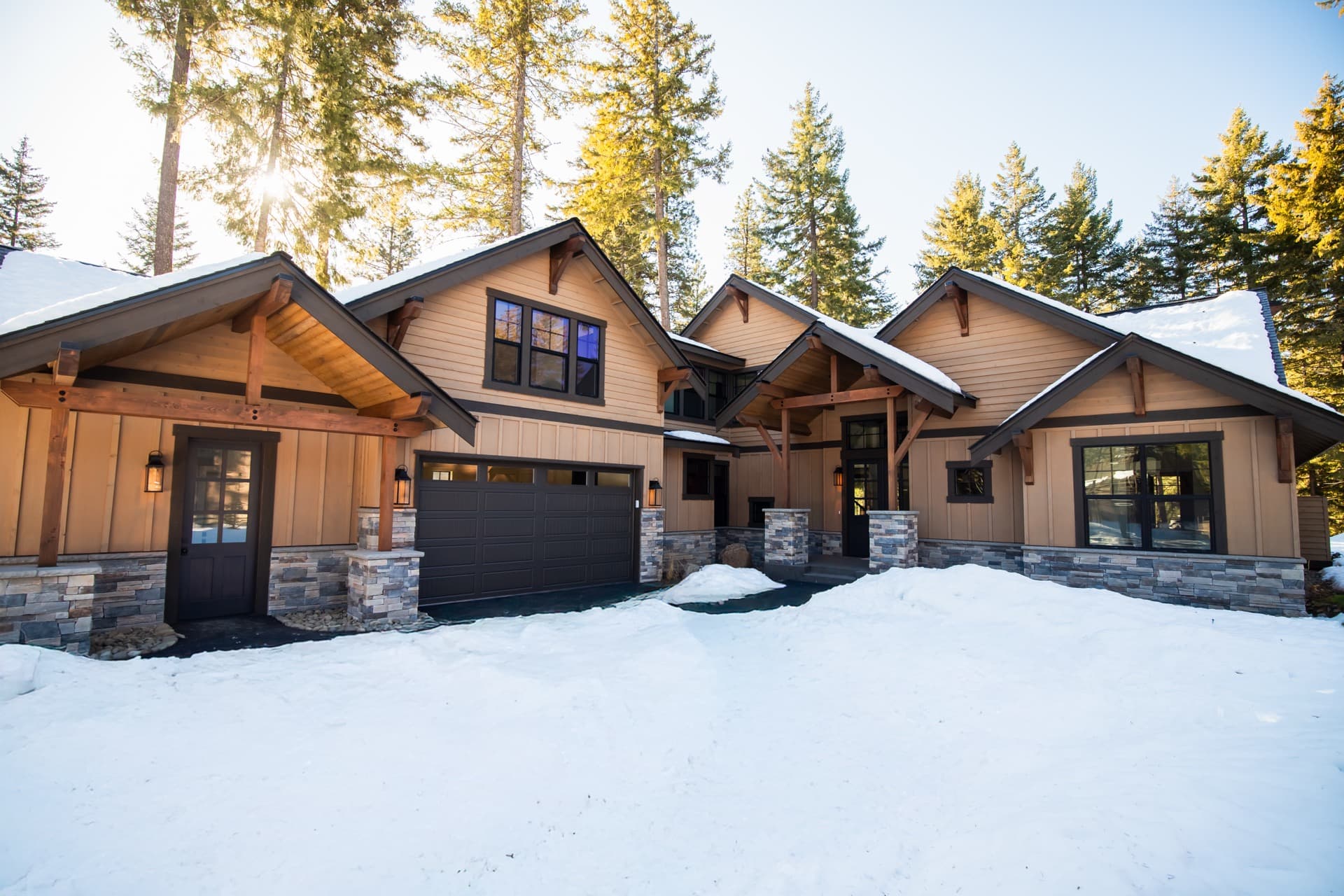
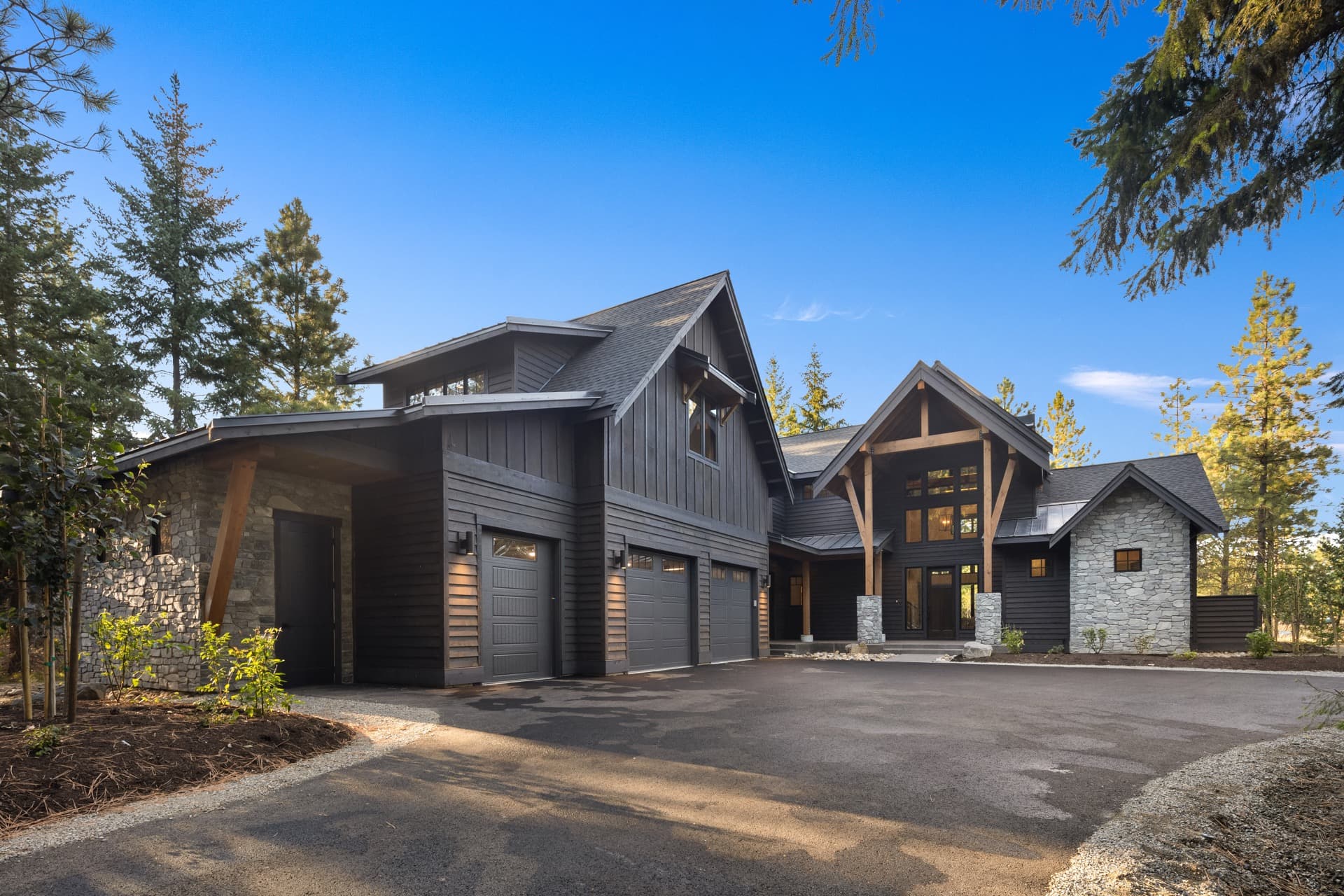
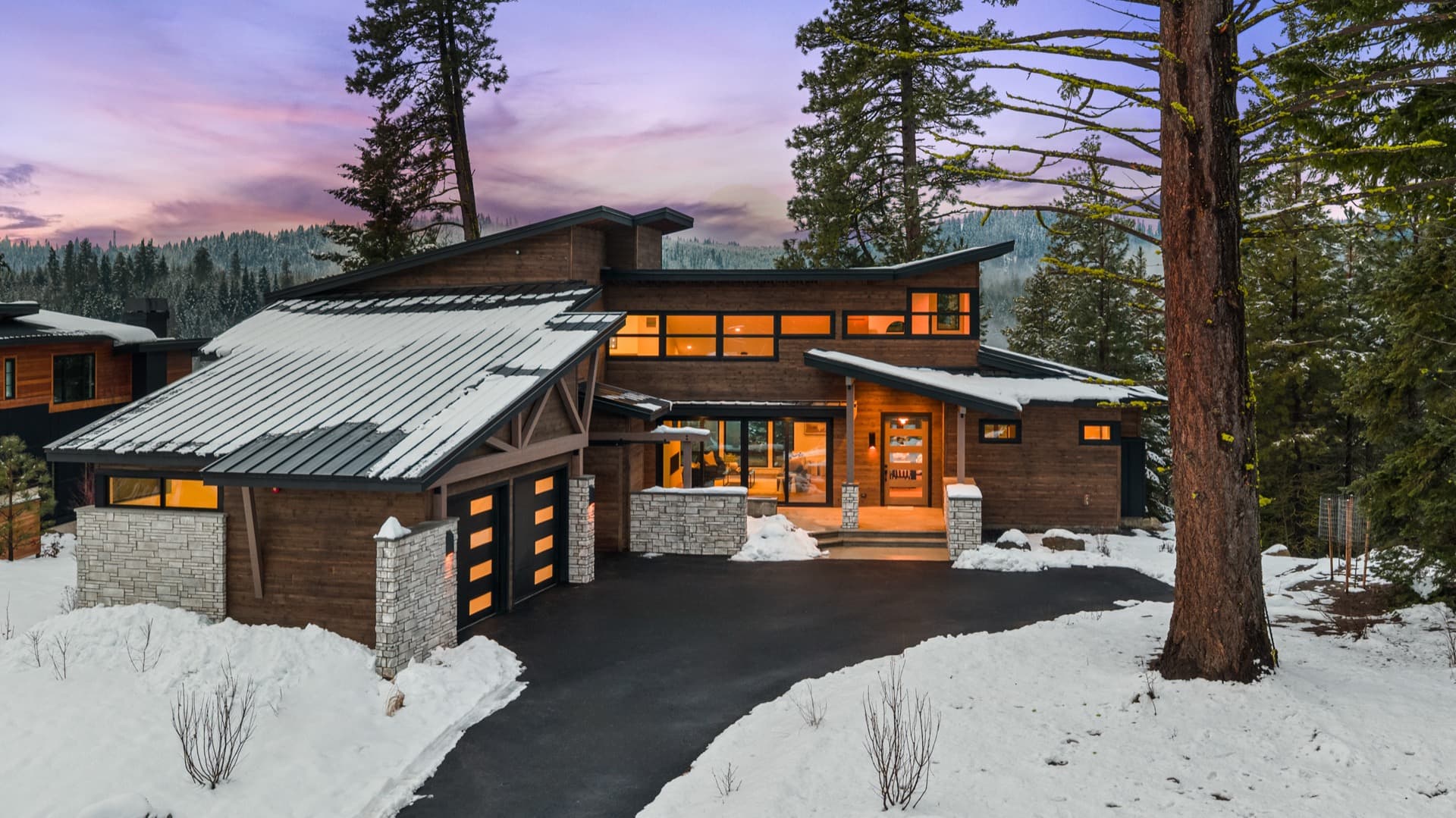
Selected projects delivered on rural parcels across the county—follow through to photography and narrative detail on each page.
Why landowners across Kittitas County build with Benchmark
Rural buyers do not want a salesman. They want someone who knows the land, the code, and the people at CDS.
- 30+ as a licensed Washington general contractor working across Kittitas County
- 98% client referral rate
- Six-year structural and one-year craftsmanship warranty coverage on every home we deliver
- Field-led oversight—our project managers run jobs from the site, which matters on parcels where conditions change with weather and access
- Transparent budget, schedule, and photo visibility for owners who may not visit daily
- Flexible contract structures aligned with lender underwriting requirements
- Direct working relationships with Kittitas County CDS, Public Health, and Public Works
Explore our Custom homes service detail, or jump to Teardown and rebuild when an existing structure is the wrong starting point.
Read our build process or client testimonials.
Frequently asked questions about building on rural Kittitas County land
Straight answers on zoning minimums, water and septic, right-of-way access, second-home provisions, the Bowers Field Overlay, schedules, and cost—link through to deeper resources when you need them.
Planning a project in Kittitas County?
Review how we deliver custom homes, teardown & rebuilds, and luxury remodels — then see related work and budgeting resources.
Builder pages